
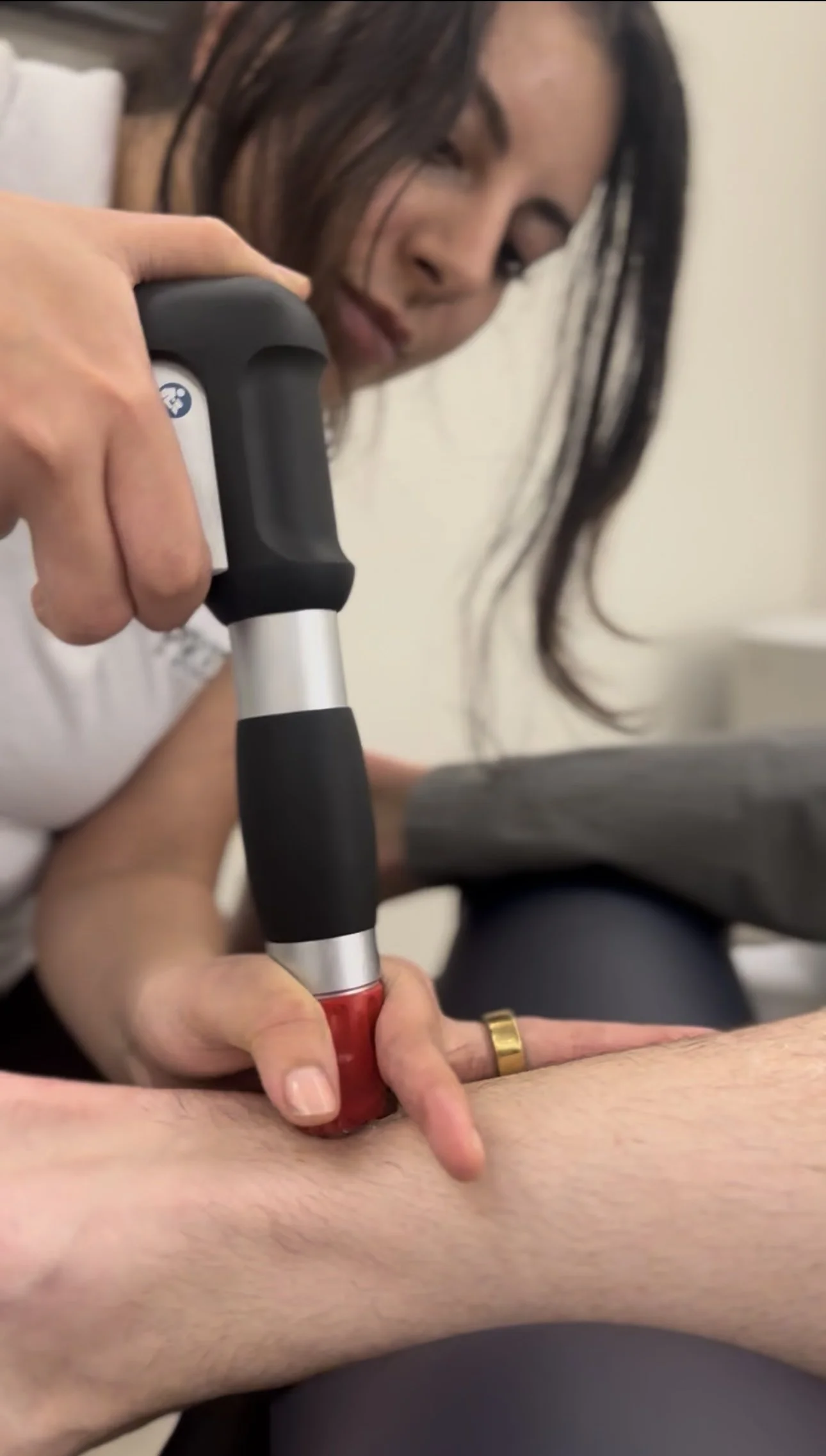
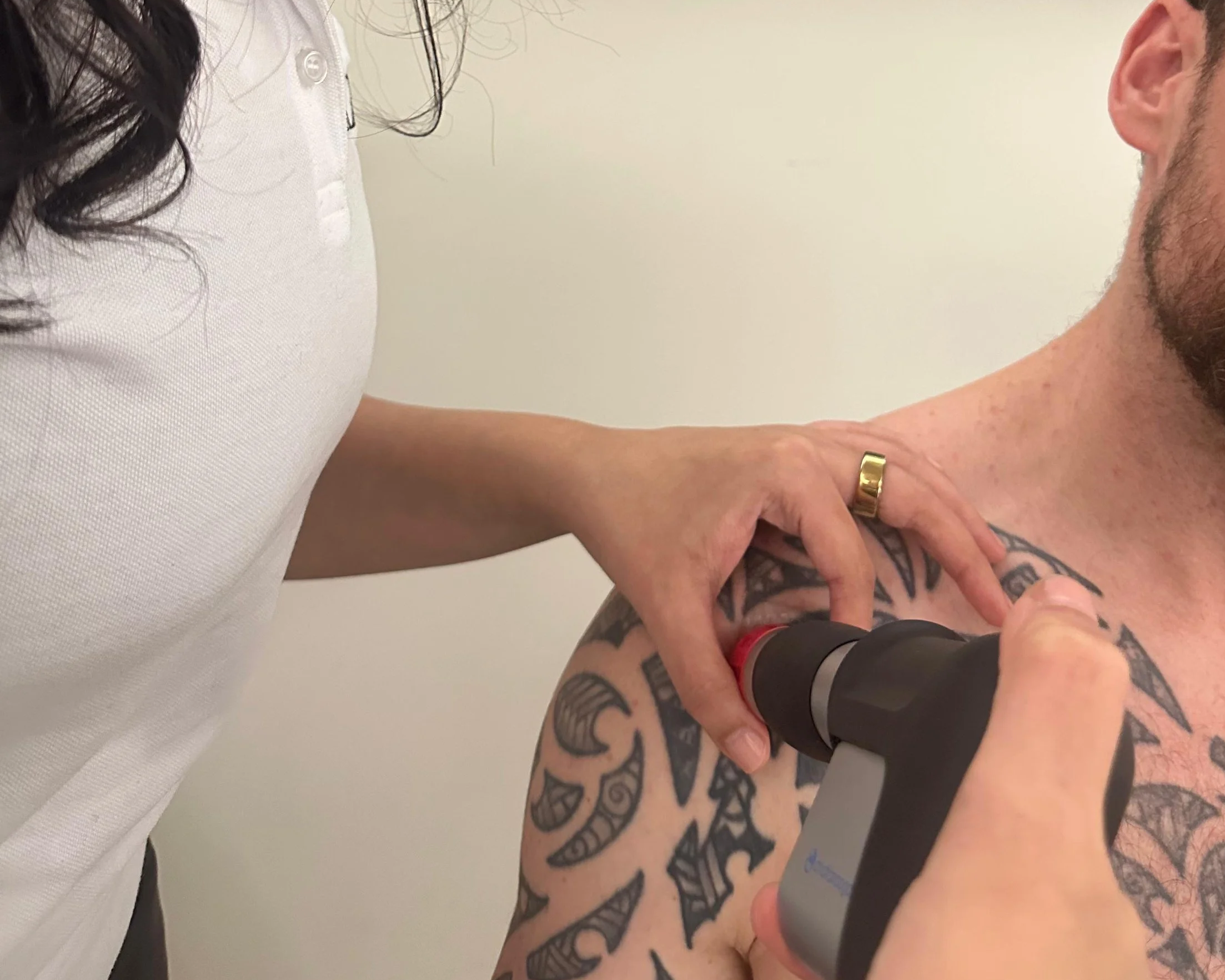
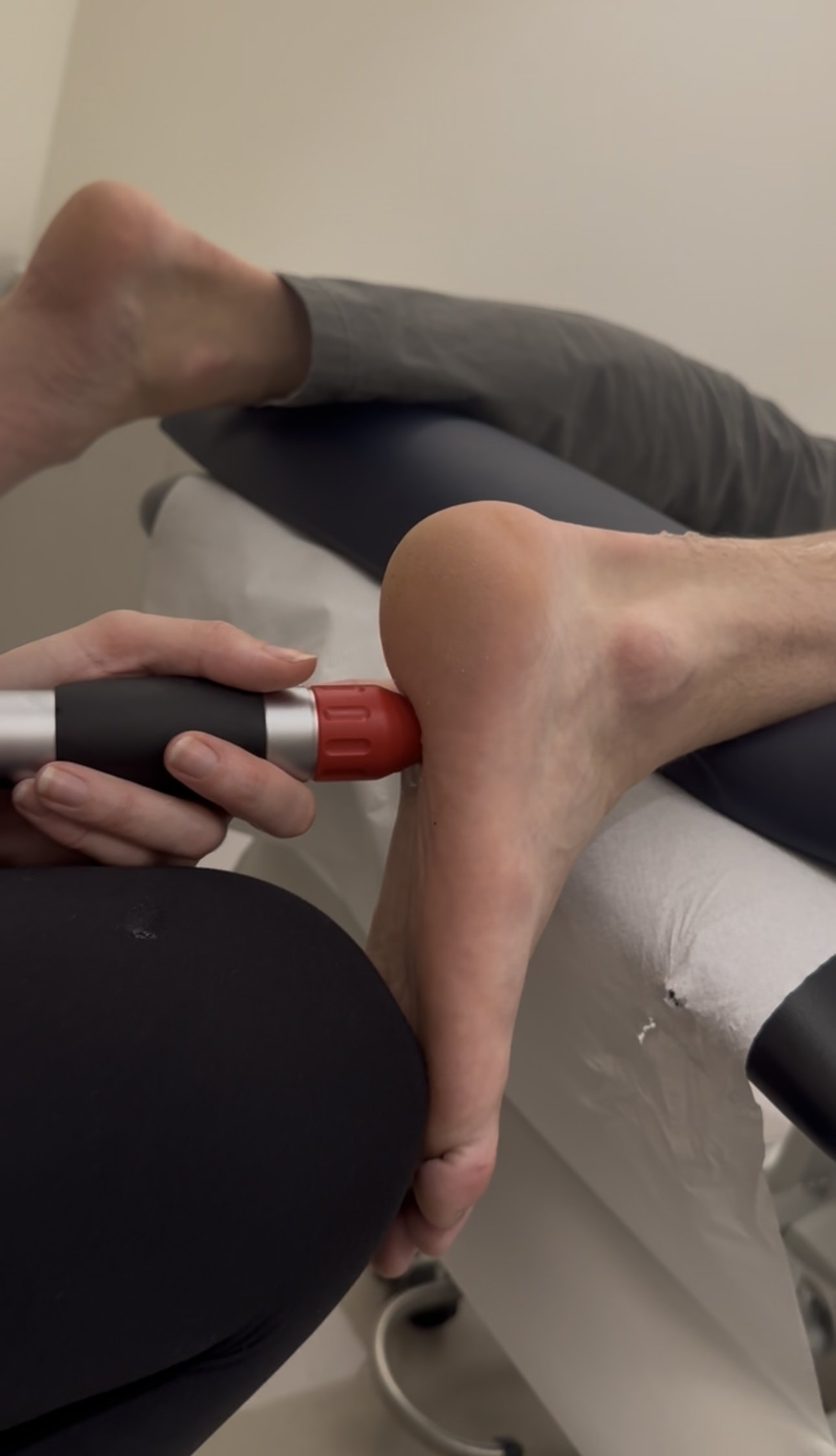
Shockwave Therapy
With Prehab Performance Specialists
Shockwave therapy is a non-invasive treatment that uses targeted acoustic waves to stimulate healing in injured or painful tissues. It is commonly used for persistent tendon, muscle, and soft-tissue conditions, particularly where pain has become long-standing or slow to settle. By increasing blood flow and stimulating the body’s natural repair processes, shockwave therapy can help reduce pain, improve mobility, and support long-term tissue healing.
It is often used as part of a wider physiotherapy or rehabilitation programme to optimise recovery and return to activity.
“Shockwave therapy supports the body’s own repair systems, making it a helpful option for long-standing pain and stubborn injuries.”
Shockwave therapy is a non-invasive treatment that uses high-energy acoustic waves to stimulate healing in injured or painful tissues. The waves work at a cellular level to increase blood flow, activate repair cells, and promote the breakdown of scar tissue and calcifications that can build up in chronic injuries.
This makes it particularly effective for conditions such as persistent tendon pain (like Achilles or patellar tendinopathy), plantar fasciitis, calcific shoulder tendinopathy, and other soft-tissue injuries that haven’t fully responded to conventional physiotherapy or rest.
You may be a candidate for shockwave therapy if you have pain or stiffness that has persisted for several weeks or months, particularly if it is interfering with your daily activities or exercise. It can be a useful option for people who want to avoid surgery or long-term medication, and it is often combined with physiotherapy, stretching, and strengthening programs to optimise recovery. While generally safe, your physiotherapist will assess your suitability based on the location and severity of your injury, as well as your overall health, to ensure it is the right approach for you.




-
Shockwave therapy (radial shockwave) is a non‑invasive treatment that uses high‑energy sound waves to stimulate blood flow, tissue healing and pain reduction in targeted areas. It’s typically used for stubborn tendon and soft‑tissue problems that haven’t settled with rest, rehab or manual therapy alone.
-
Shockwave is most commonly used for chronic plantar fasciitis, Achilles tendinopathy, patellar tendinopathy (jumper’s knee), greater trochanteric/gluteal tendinopathy, and some other long‑standing tendon or soft‑tissue problems. We’ll assess you first to decide whether it’s appropriate for your condition.
-
You may feel some discomfort during treatment, particularly over sensitive areas, but it is generally well‑tolerated and each application is brief. We can adjust the intensity to keep it within a manageable level for you.
-
Most people need a short course of sessions, typically spread over several weeks. The exact number depends on your condition, how long it has been present, and how you respond to treatment. Your clinician will outline a recommended plan at your assessment. A standard protocol is to begin with 3-5 sessions and consistently assess your response to treatment, load and symptoms.
-
No. The best results come when shockwave is combined with a structured rehab plan, including load management and progressive strength work. We always integrate it into a broader physiotherapy programme rather than using it in isolation.
-
Shockwave isn’t suitable for everyone. It is usually avoided if you’re pregnant, have certain circulation or nerve problems, take particular medications, or have a pacemaker or active infection in the treatment area. We’ll screen for contraindications at your assessment.
-
Some people feel an improvement after just a few sessions; for others, the main benefits emerge over several weeks as tissue adapts and rehab progresses. Our focus is on meaningful changes in pain, function, and performance, not just short‑term symptom suppression.
-
A typical session includes a brief progress review, targeted shockwave application to the affected area, and time to progress your rehab plan. We’ll also refine your loading, training and recovery strategy based on your goals.